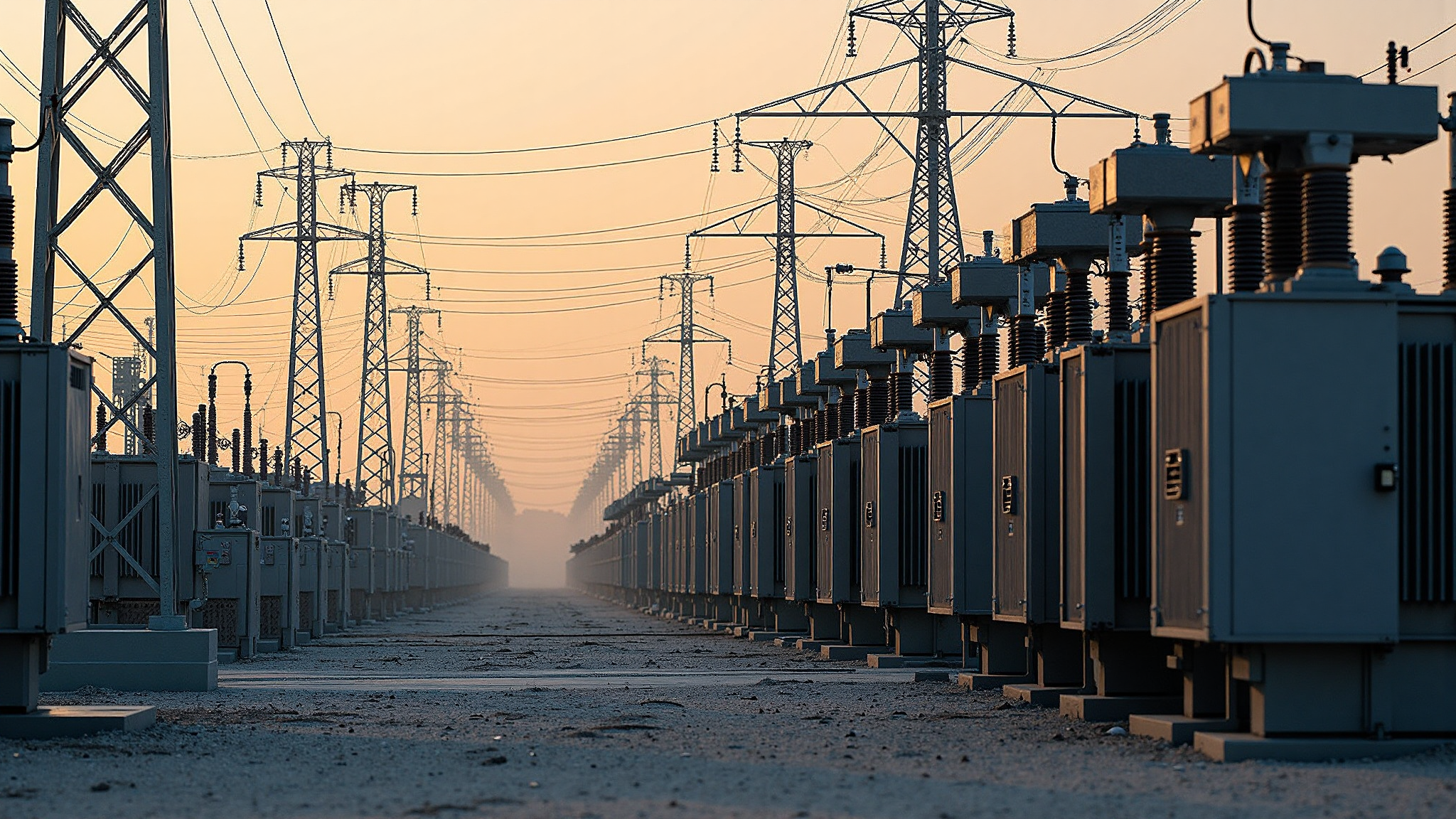


Against the backdrop of accelerating global carbon neutrality goals, China's manufacturing industry is undergoing a profound green transformation. As a core material for high-efficiency energy saving, amorphous alloys, with their excellent soft magnetic properties and low loss characteristics, are becoming a key force in promoting energy efficiency improvement.

Policy Drivers: Green Manufacturing System Accelerating
In recent years, the country has intensively introduced a series of policy measures to support green manufacturing. The 14th Five-Year Plan for Industrial Green Development clearly proposes to vigorously promote energy-saving materials and high-efficiency energy-saving equipment. The National Industrial Energy-Saving Technology Recommendation Catalog issued by the Ministry of Industry and Information Technology has repeatedly listed amorphous alloy transformers and amorphous alloy motors as key promotion technologies.
Under the rigid constraints of the dual-carbon goal, high energy-consuming industries face greater energy-saving pressure. As one of the main sources of carbon emissions, the power industry has an urgent demand for low-loss transformers. Compared with traditional silicon steel transformers, amorphous alloy core transformers can reduce no-load losses by 60% to 70%, making this significant advantage the preferred solution for grid upgrade and renovation.
Market Demand: Multi-Field Applications Continuously Expanding
The application fields of amorphous alloy materials are rapidly expanding. In the distribution transformer field, with the growth of urban and rural grid renovation and new energy grid connection demand, the market penetration rate of amorphous alloy transformers is increasing year by year. In the new energy vehicle field, amorphous alloy materials used in drive motors and on-board chargers can effectively improve motor efficiency and reduce energy consumption.

In addition, in emerging fields such as photovoltaic inverters, wind power generation, rail transit, and data centers, amorphous alloy materials also show broad application prospects. According to industry research institutions, the global amorphous alloy material market size will maintain double-digit growth in the next five years.
Development Trends: Technological Innovation Leading Industry Upgrade
Facing continued market demand growth, the amorphous alloy industry is accelerating technological innovation and industrial upgrading. In material R&D, the new generation of iron-based amorphous alloys has achieved breakthroughs in magnetic properties, mechanical strength, and temperature resistance, further broadening application scenarios. In manufacturing processes, the application of continuous and automated production lines has significantly improved product consistency and production scale.
Looking ahead, with the continuous improvement of the green manufacturing system and the continuous expansion of downstream application fields, amorphous alloy materials will usher in broader development space. Enterprises need to continue to increase R&D investment, improve product performance and quality stability, and promote the large-scale application of amorphous alloy materials in more scenarios.